
There is no single US packaging regulation that matches the EU PPWR. Instead, the rules come from two directions: federal action by the FDA on food-contact substances, and a growing number of state laws on PFAS and on who pays for packaging waste.
For a bakery or frozen bakery producer selling into the United States, both directions lead to the same buyer questions: is the packaging PFAS-free, and what happens to it after use?
Federal: PFAS grease-proofing has left the US market
On 28 February 2024, the FDA announced that grease-proofing substances containing PFAS were no longer being sold for food-contact use in the United States. The announcement completed a voluntary market phase-out agreed with manufacturers in 2020. These substances had been used on paper and paperboard packaging such as wrappers, takeout containers and bags.
The FDA notes that this removed the primary source of dietary exposure to PFAS from authorised food-contact uses. It continues to develop analytical methods to monitor food packaging.
States: PFAS bans in food packaging
A growing list of states bans intentionally added PFAS in food packaging. Laws are already in effect in New York, California, Washington, Vermont, Colorado, Connecticut, Maryland, Minnesota, Rhode Island and Hawaii, and Maine has a ban scheduled for 2030.
The details differ. Some states define the ban by intentionally added PFAS, others by measured fluorine; some cover sale and distribution, others manufacture. An FDA authorisation does not automatically satisfy a state ban, so importers usually ask for one PFAS statement that covers every state they sell into.
States: extended producer responsibility for packaging
Seven states have packaging EPR laws: Oregon, Colorado, California, Maine, Minnesota, Maryland and Washington. Under EPR, the company that places packaged goods on the market joins a producer responsibility organisation, reports the packaging it uses and pays fees that fund collection and recycling.
- Oregon started its programme on 1 July 2025.
- Colorado starts in 2026, with dues based on 2024 packaging data.
- Washington requires producers to register with a PRO by 1 July 2026.
- Maine requires producers to register and report 2025 packaging data in 2026.
- Minnesota starts its programme in 2029, with producers covering most net costs from 2031.
- California (SB 54) requires all packaging to be recyclable or compostable by 2032, a 25% reduction in plastic packaging and a 65% recycling rate for plastic packaging, with interim targets in 2028 and 2030.
EPR fees are typically adjusted by material and recyclability. Packaging that is easy to recycle in existing streams tends to carry lower fees than mixed or hard-to-recycle formats.
What this means for the tray
- Confirm PFAS status in writing for every format, with a statement you can share with US customers.
- Know who the “producer” is. Under most state EPR laws it is the brand owner or the first distributor in the state, which may be you or your importer.
- Record material weights by format, because EPR reporting is based on them.
- Prefer mono-material and fiber-dominant formats where performance allows, to reduce both compliance risk and fees.
How G-Flute trays answer the questions
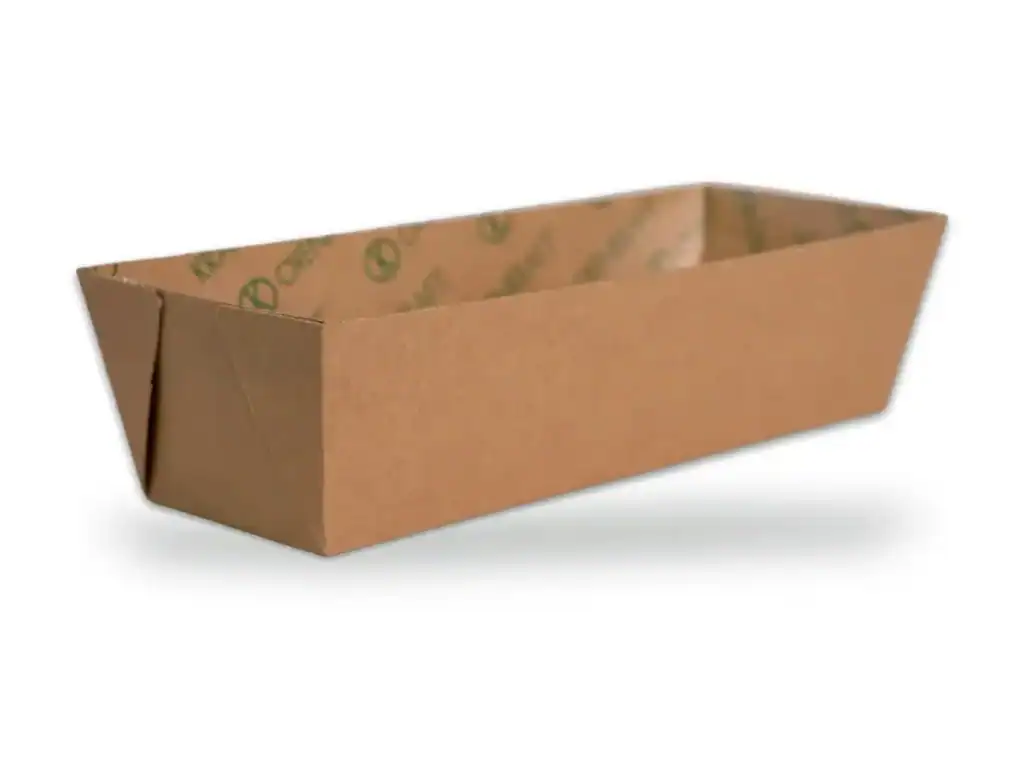
G-Flute trays are made from FDA-compliant, food-contact materials and produced under ISO 22000 food safety management. Grease and moisture resistance comes from a thin functional film on barrier grades, not from a fluorinated treatment. Compliance documents for your target market are supplied on request, together with the shipment.
Planning exports to North America? Tell us your products and target states, and we will prepare the compliance documentation for your target markets.
This article is an overview, not legal advice. State laws change often; confirm current requirements before you ship.
Sources: US FDA constituent update, 28 February 2024; Olsson Frank Weeda, PFAS in Food Packaging state compliance guide; Packaging School, EPR for packaging dates in 2026; Food Packaging Forum on California SB 54.