
The EU Packaging and Packaging Waste Regulation, Regulation (EU) 2025/40, known as the PPWR, entered into force on 11 February 2025 and has applied since 12 August 2026. It replaces the previous Packaging Directive with a single regulation that applies directly in every EU member state. For bakeries and food manufacturers, it changes how packaging is documented now, and how it must be designed by 2030.
This article is a practical overview, not legal advice. Check the obligations for your products with your compliance team.
The dates that matter
- 11 February 2025: the PPWR entered into force.
- 12 August 2026: the regulation applies, including documentation duties and the restriction on PFAS in food-contact packaging.
- 2028: design-for-recycling criteria are due to be adopted, and labelling information enters the technical documentation.
- 2030: recyclability performance grades and packaging minimisation requirements apply, and harmonised sorting labels are introduced.
- 2035: packaging must be recyclable at scale.
PFAS in food-contact packaging
From 12 August 2026, food-contact packaging placed on the EU market may not contain per- and polyfluoroalkyl substances above the limits set in the regulation. Fluorinated grease-resistant treatments have been common in paper packaging, so buyers should ask suppliers to confirm compliance for every format they use.
Documentation: declarations and technical files
Packaging covered by the PPWR needs a declaration of conformity and supporting technical documentation. In practice, procurement teams will increasingly ask suppliers for material composition, substance compliance and, from 2030, a recyclability assessment for each format.
Recyclability grades from 2030
From 2030, packaging will be graded on recyclability using EU design-for-recycling criteria. Packaging below the minimum grade may not be placed on the market. Mono-material and fiber-dominant designs are generally easier to align with these criteria than multi-material constructions, but the final assessment depends on the detailed criteria still to be adopted.
Minimisation
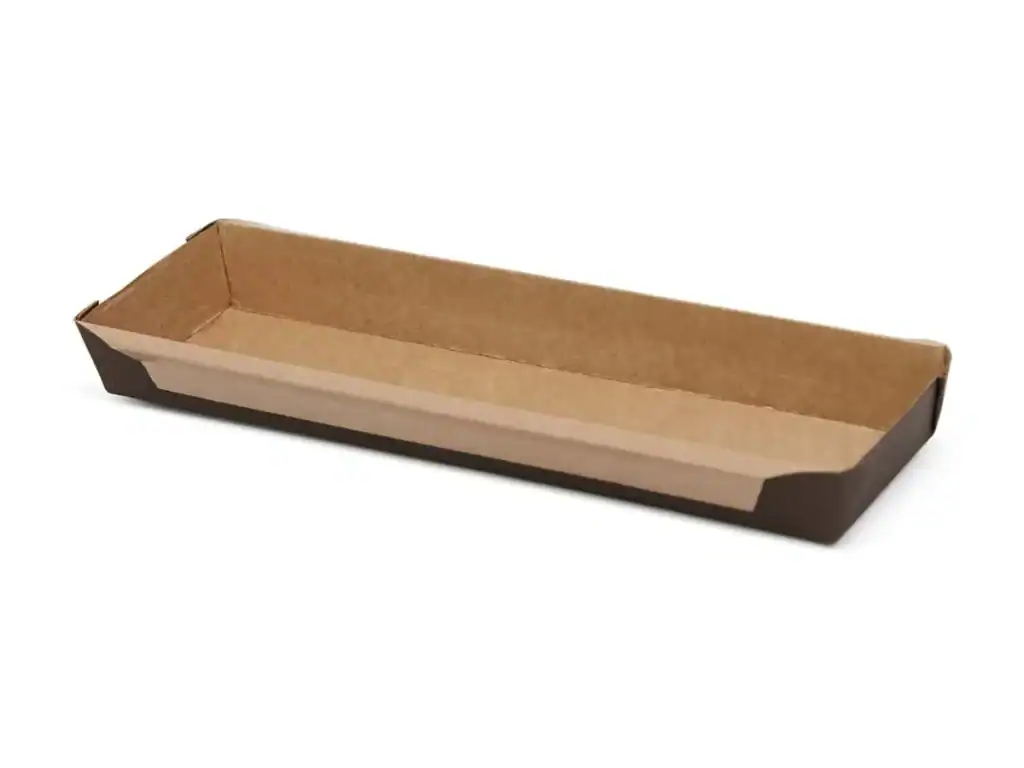
From 2030, packaging weight and volume must be reduced to the minimum needed for its function. A tray that also works as the baking form, the freezer pack and the retail display does several jobs with one piece of material, which supports that case.
What to prepare now
- List every tray and form you use, with material and supplier.
- Ask each supplier for a declaration of conformity and confirmation of PFAS compliance.
- Identify multi-material or plastic trays that may struggle with recyclability grading.
- Trial fiber-based alternatives on your line before 2030 deadlines compress the timetable.
Our team can share the documentation available for G-Flute formats. Contact us with the products you need to cover.
Sources: European Commission and European Circular Economy Stakeholder Platform summaries of Regulation (EU) 2025/40.